
Create a platform that promotes fact-based, structured debates backed by verified news sources?
Online debates are broken. We set out to fix that.
57% of people consume biased content without realizing it. 59% are concerned about fake news. And the average person spends 150 minutes a day on platforms that reward outrage over insight. Twitter, Reddit, and Facebook debates are toxic, unstructured, and flooded with misinformation.
There was no platform organizing discourse around verified facts and diverse perspectives. The trust layer was missing entirely.
Online debates have no framework. Noise drowns out signal; important arguments get lost in unstructured comment threads with no hierarchy.
Arguments go unchallenged and unsourced. Misinformation spreads unchecked because there's no mechanism to grade or verify what's being said.
Platforms optimize for engagement, not insight. Rage-bait and partisan content surfaces over evidence-based reasoning, by design.
No platform combines structured debate, evidence requirements, and balanced viewpoint promotion.
My role and contributions.
I conducted Market Research and Competitive Analysis, defined Product Positioning with news verification as the core differentiator, designed the Figma Prototype including the news repository feature, contributed to OKR and Roadmap Planning, and pitched the solution to industry experts for validation and feedback.
- Multi-disciplinary : Operations Research, Product Design, MBA/Product, Computer Science
- Cross-institutional : Cornell Tech × Parsons School of Design
- Studio format : Cornell Tech Startup Studio, Jan–May 2023
Three problems. Three solutions.
We mapped the core pain points in online discourse and designed targeted solutions for each. Every feature in the product traces directly back to a validated user problem.
Important arguments disappear into unstructured comment threads. There's no way to see the full landscape of a debate.
A visual argument map that surfaces pro/con perspectives at a glance, letting users see the full shape of a debate before diving in.
Arguments go unchallenged and unsourced. There's no way to tell a well-researched point from an opinion dressed as fact.
Every argument is graded on evidence quality, substance, and relevance, sourced from verified outlets, not anonymous posts.
Debate threads are chaotic. There's no consistent format to follow an argument from claim to evidence to conclusion.
A structured debate format with clear sections, threading, and hierarchy, so users follow the argument, not the chaos.
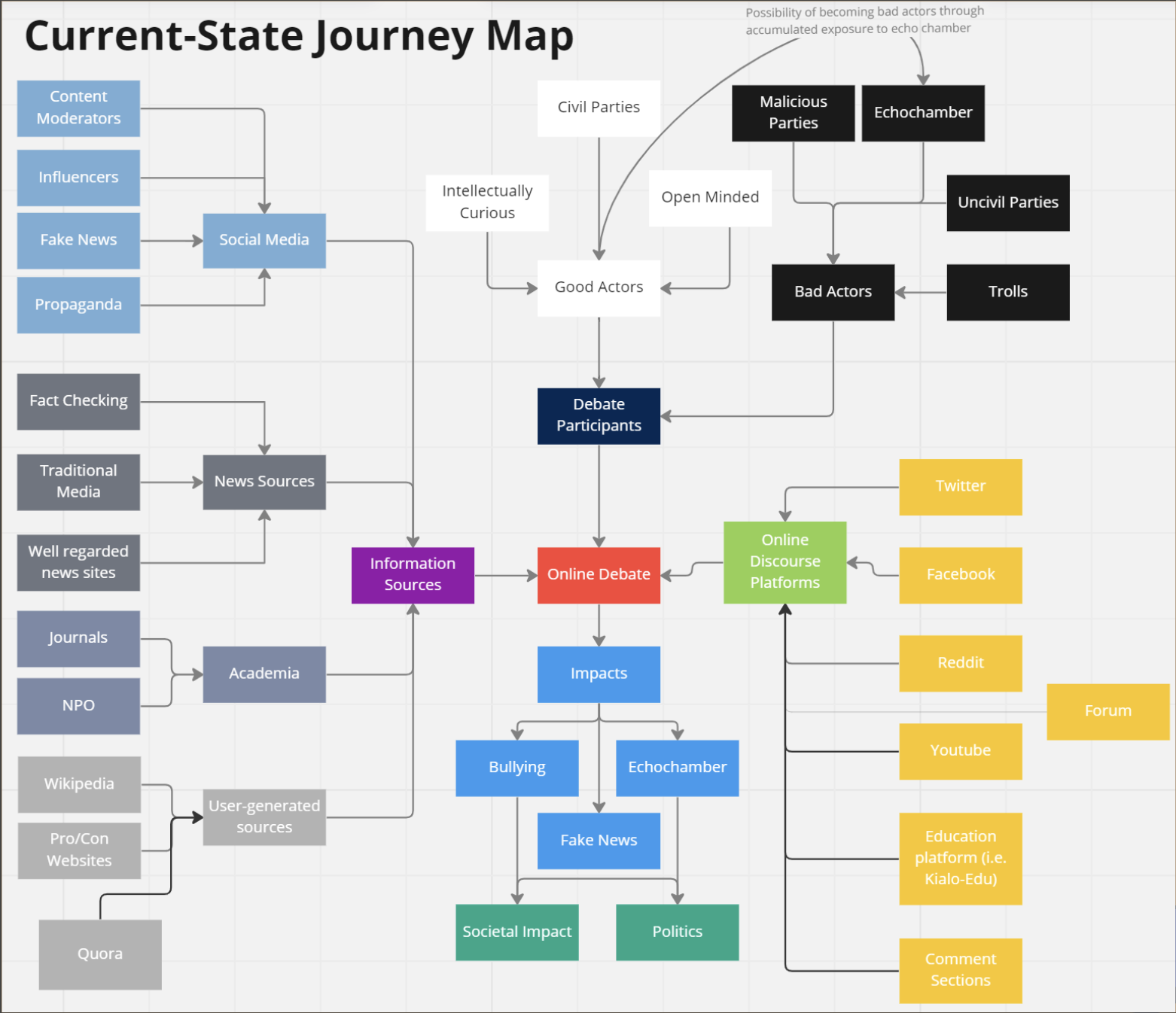
Current-state journey map: mapping the online debate ecosystem
Who else was in this space?
I mapped existing platforms against two dimensions: how structured their debate format was, and whether they verified the evidence behind arguments.
Kialo Edu offers structured debates but is limited to educational settings. Twitter, Reddit, and Facebook have debate features but promote echo chambers over evidence. None combined structured argumentation with verified news sources.
From objectives to roadmap.
We defined 4 OKRs with measurable key results using a SMART framework, built a Q1-Q2 product roadmap from planning to launch, and conducted an 8-zone ethical risk assessment covering everything from misinformation to algorithmic bias and data monetization.
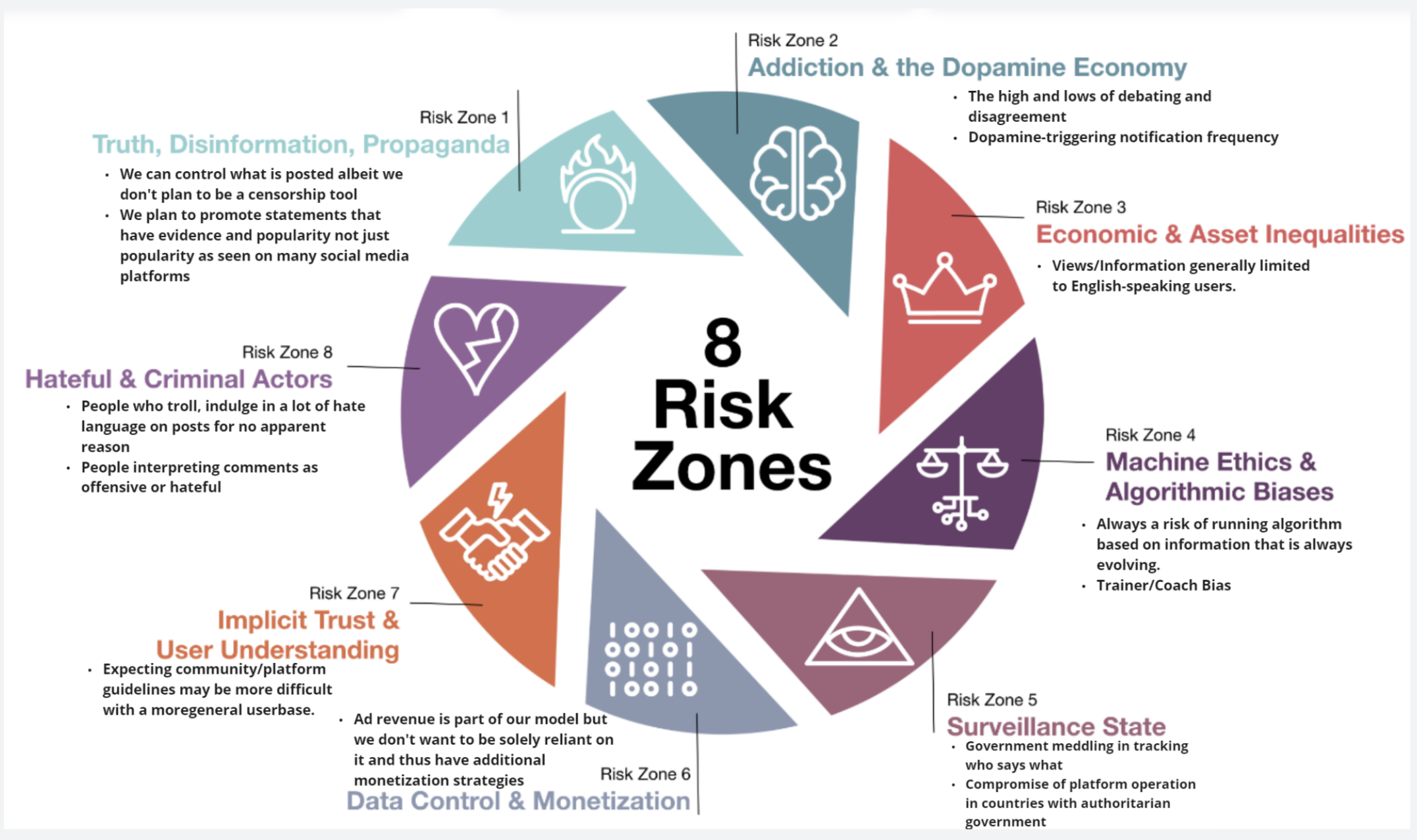
8 Risk Zones: ethical and technical risk evaluation
This is where the product came to life.
I designed the Figma prototype: a mobile-first experience that takes users from topic discovery through evidence-backed argumentation in five clear steps.
01. Home Feed — Trending topics across categories
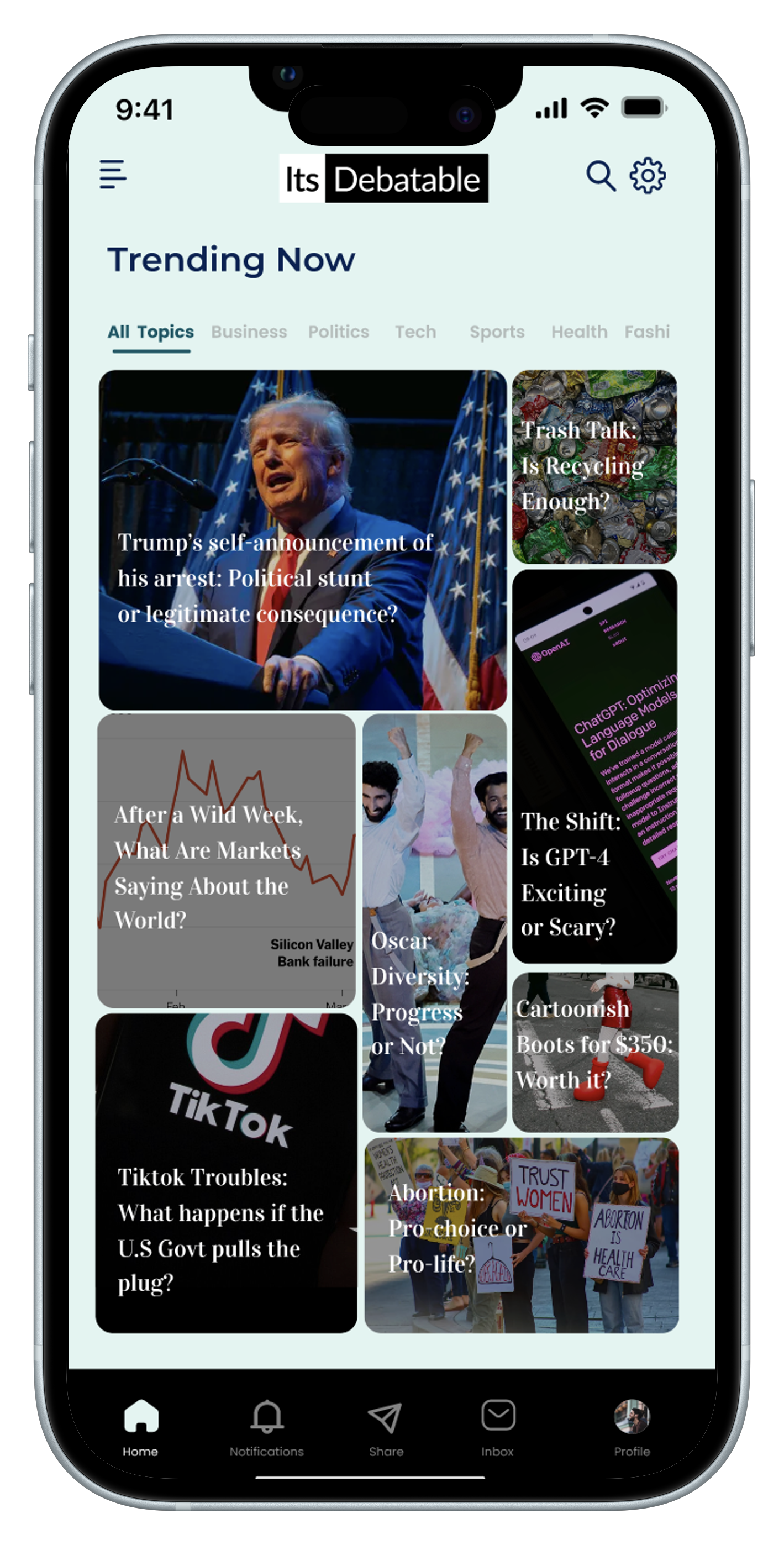
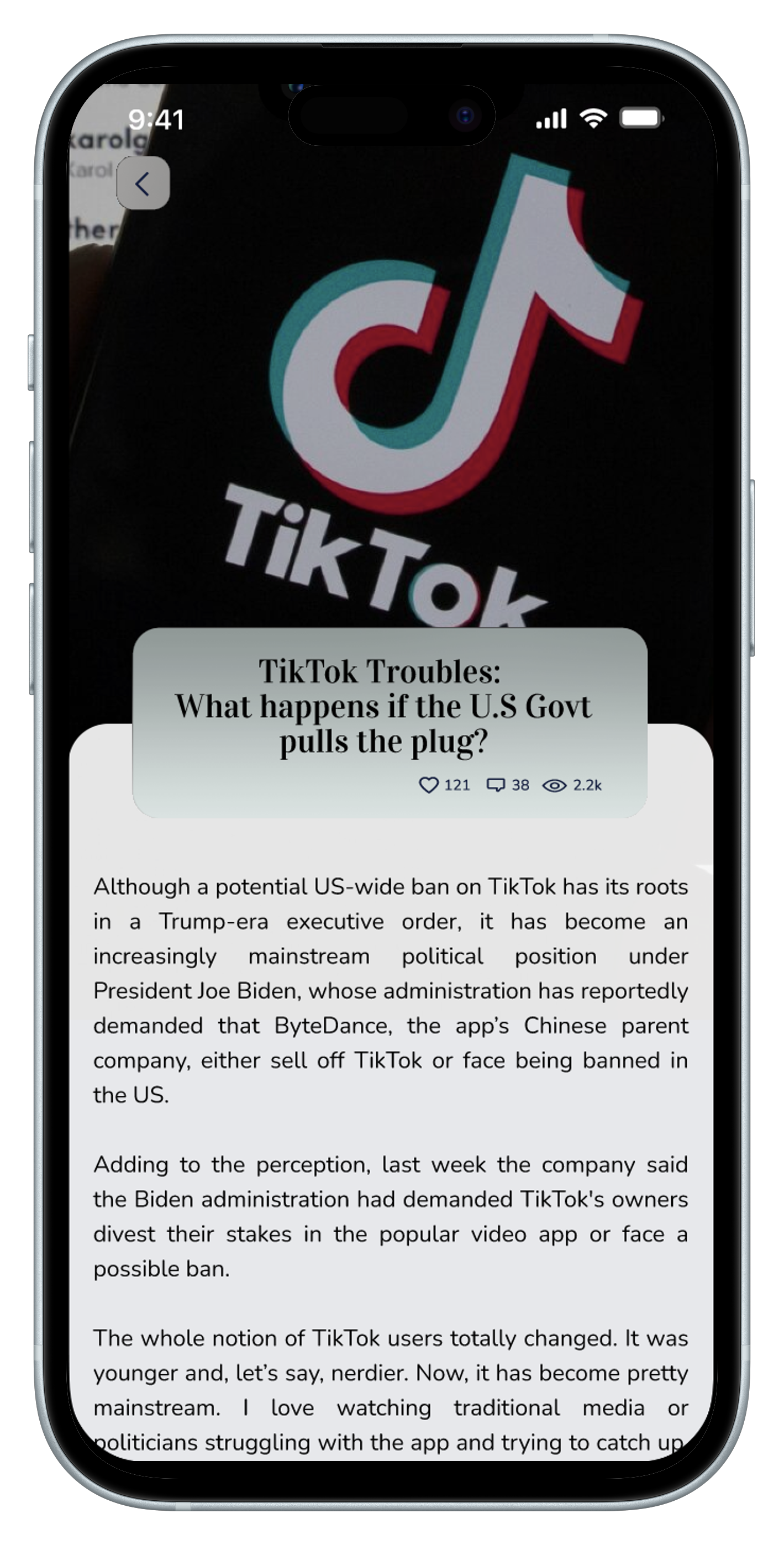
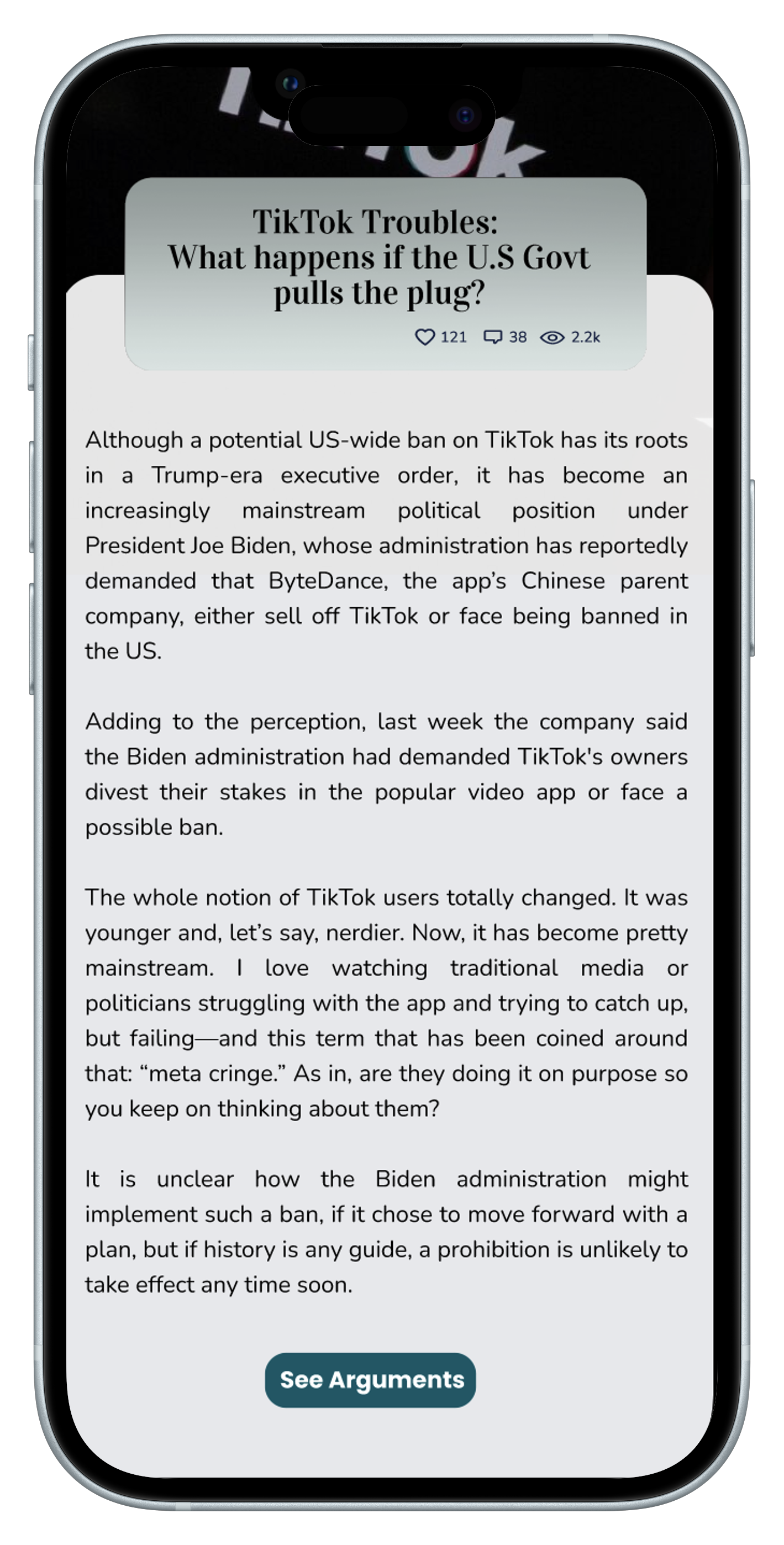
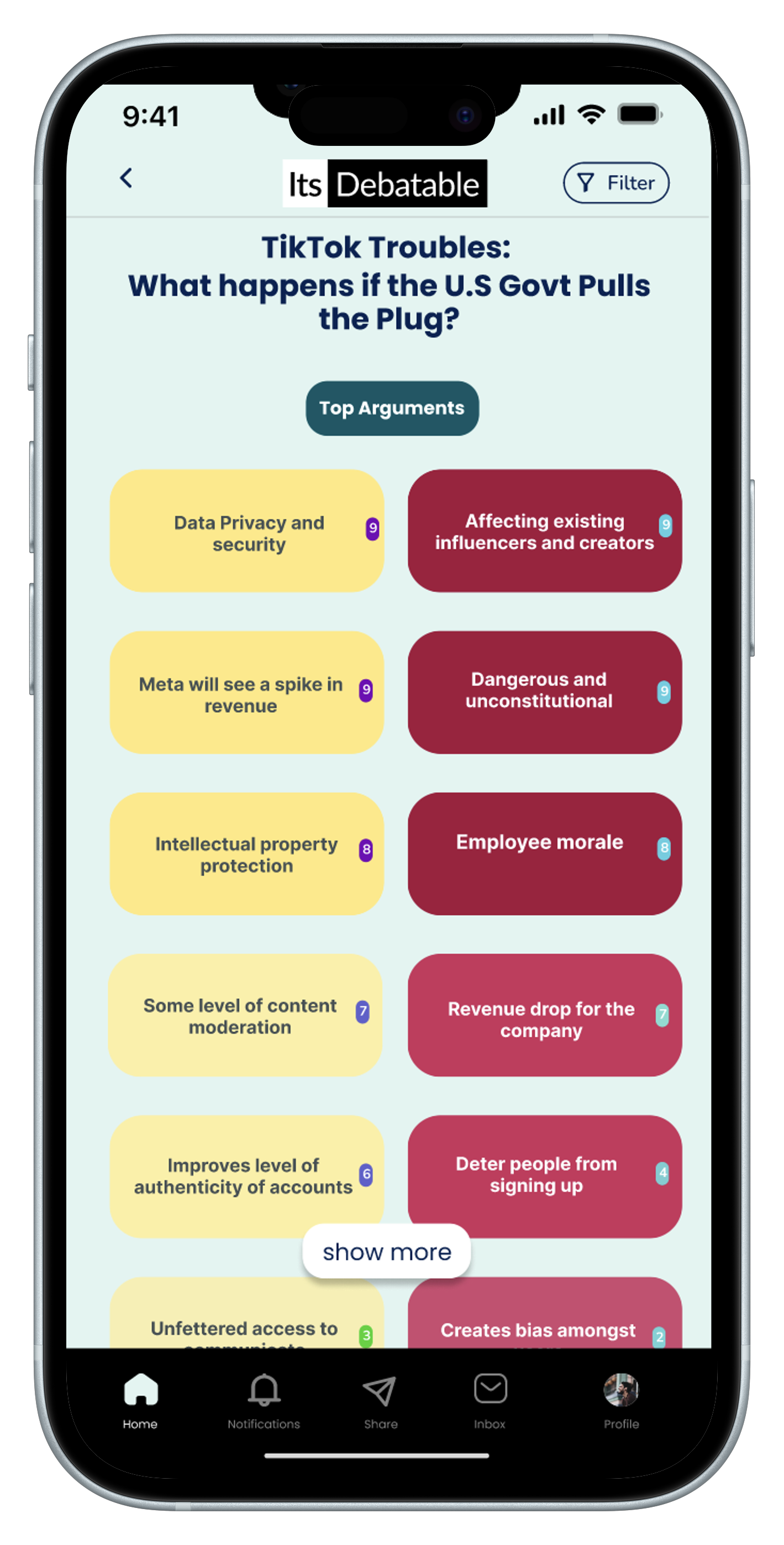
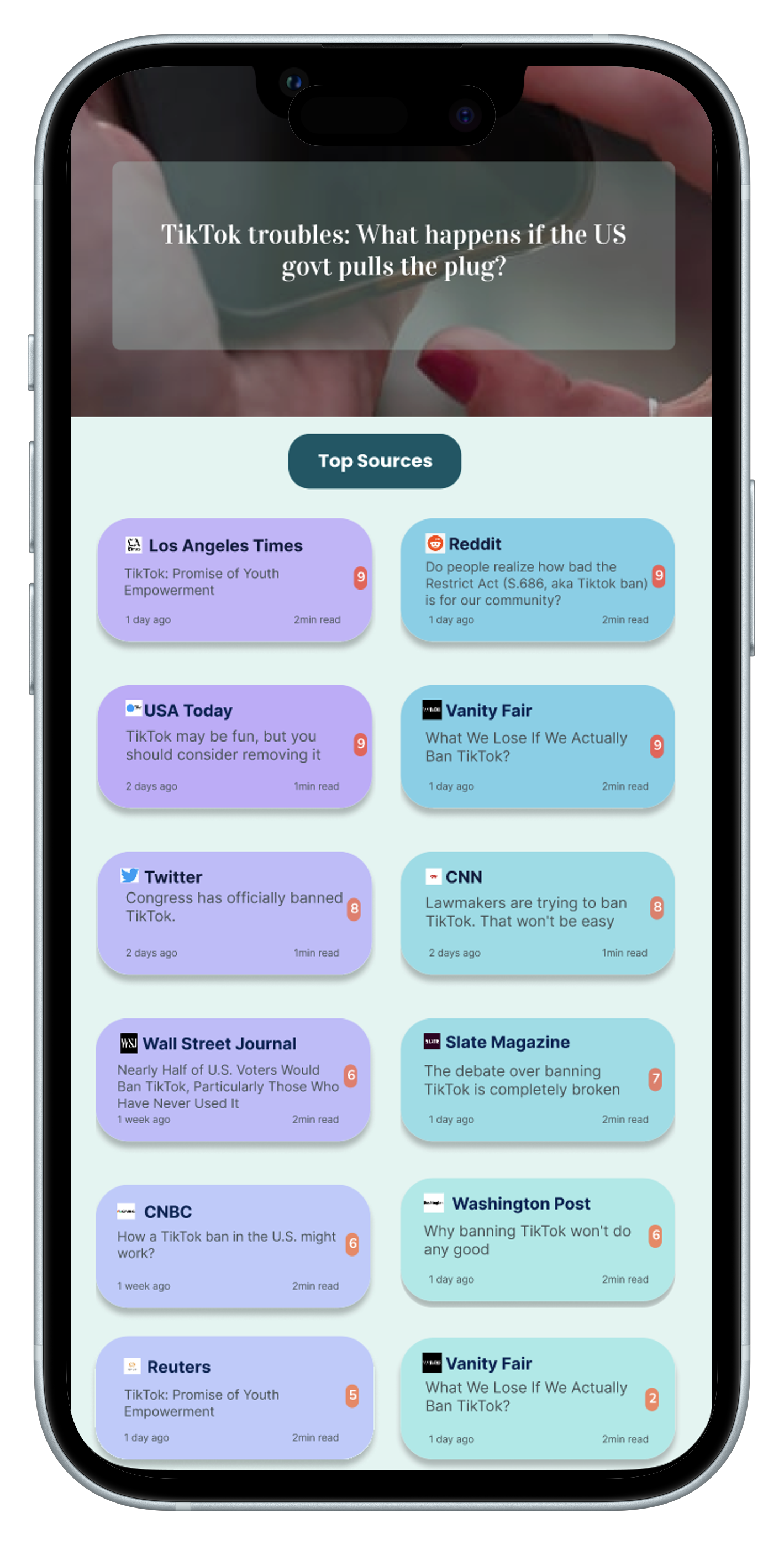
These are select screens from the prototype. Explore the complete interaction flow on Figma →
Argument mapping that users actually wanted.
The arguments view uses a binary layout with color-coded pro/con cards, each tagged with evidence grades. Users can see the full landscape of an argument before diving deeper.
95% of test participants preferred this argument map over traditional threaded discussions.
The news repository: our trust layer.
Instead of letting debates devolve into "I read somewhere that...," we built a curated evidence view sourcing from LA Times, USA Today, CNN, Wall Street Journal, Reuters, Washington Post, and more. Each source is graded for relevance. Arguments backed by evidence, not by anonymous posts.
100% of test participants wanted a gauge for comment validity.
What success looks like.
We defined north-star metrics across engagement, satisfaction, discussion quality, and platform growth to measure whether Debatable was delivering real value — not just activity.